Knee Pain Relief: What Helps, What Doesn't, When to Worry
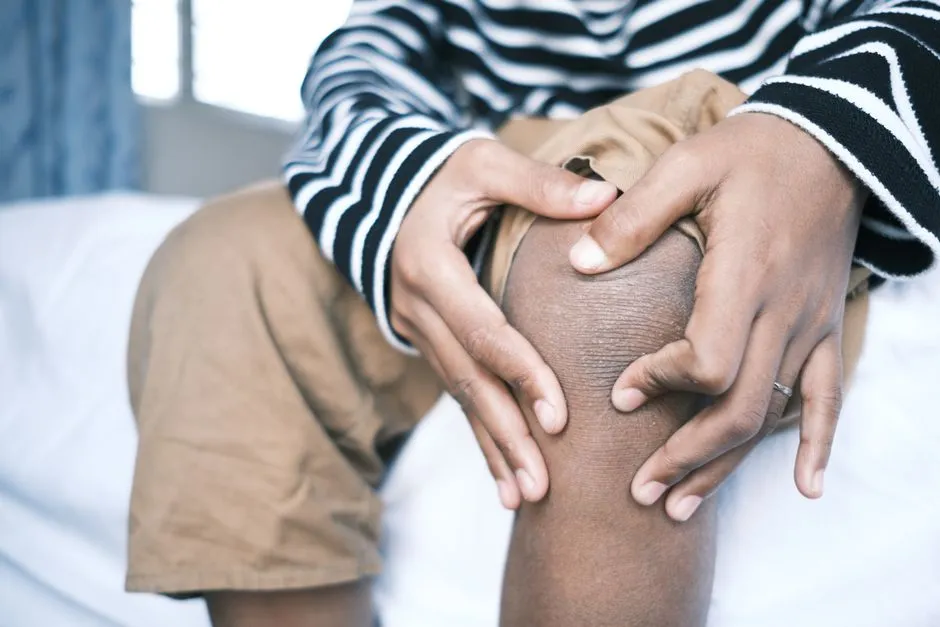
- What actually helps knee pain?
- When does knee pain need urgent help?
- Why does a knee hurt in the first place?
- What should you do in the first few days?
- Is ice or heat better for knee pain?
- Why is exercise the main treatment for long-term knee pain?
- How do you keep moving without making it worse?
- Does losing weight help knee pain?
- What does the guidance not support?
- When should you see a GP or physiotherapist?
- Where should you go next?
- Sources
What actually helps knee pain?
For most everyday knee pain, relief comes from a few unglamorous things done consistently: easing the load for a few days, using ice or heat as a comfort measure, then building back with gentle strengthening and regular low-impact activity. UK guidance from the NHS says knee pain "can often be treated at home" and that you "should start to feel better in a few days". Pain that is severe, follows a real injury, or comes with fever, a hot red knee or a knee that will not bear weight needs a professional, not a home routine.
Below: what mainstream physiotherapy guidance supports, what it does not, and how to tell a knee that needs patience from one that needs a doctor. Nothing here is a diagnosis, and the NHS is plain on this point: "do not self-diagnose – see a GP if you're worried."
When does knee pain need urgent help?
The NHS knee pain page says to get advice from NHS 111 now if:
- your knee is very painful
- you cannot move your knee or put any weight on it
- your knee is badly swollen or has changed shape
- your knee locks, gives way or painfully clicks (the NHS notes that painless clicking is normal)
- you have a very high temperature, or feel hot, cold or shivery, and have redness or heat around your knee, which the NHS says "can be a sign of infection"
After an injury, the NHS guidance on sprains and strains goes further and says to call 999 or go to A&E if you heard a crack when the injury happened, the injured part has changed shape or is pointing at an odd angle, it is numb, tingling or has pins and needles, or the skin around it has changed colour (such as blue or grey) or is cold to touch. The same page warns: "Do not drive to A&E."
Outside the UK, the same symptoms mean contacting your doctor, urgent care or emergency services, depending on severity. Do not exercise through any of them.
For pain that is not urgent but is not going away, the NHS advises seeing a GP if knee pain "does not improve within a few weeks". It also notes that in many areas you may be able to refer yourself to NHS community musculoskeletal (MSK) services, such as physiotherapy, without a GP referral.
Why does a knee hurt in the first place?
The NHS groups common causes into two broad families. Pain after an injury may come from sprains and strains, tendonitis, a torn ligament, tendon or meniscus, or a dislocated kneecap. Pain with no obvious injury may come from osteoarthritis (a long-term joint condition; the NHS describes pain and stiffness in both knees with mild swelling, more common in older people), bursitis, bleeding in the joint, gout or septic arthritis, or, in teenagers and young adults, Osgood-Schlatter's disease.
Several of those causes feel alike from the inside and need very different care, which is why this page will not guess at yours. What follows is general guidance for everyday aches without any of the warning signs above.
What should you do in the first few days?
The NHS suggests three things to try at first for knee pain:
- put as little weight as possible on your knee, for example by avoiding standing for a long time
- use an ice pack or a bag of frozen peas wrapped in a tea towel on your knee for up to 20 minutes every 2 to 3 hours
- use painkillers such as paracetamol or ibuprofen gel or tablets
If the pain followed a twist or overstretch, the NHS sprains and strains page recommends PRICE therapy for the first 2 to 3 days: Protection, Rest, Ice, Compression and Elevation. The same page advises trying to avoid heat (such as hot baths and heat packs), alcohol and massages for the first couple of days to help prevent swelling, and then, once you can move the injured area without pain stopping you, to keep moving it so the joint or muscle does not become stiff.
On medicines, ask a pharmacist what suits you. The NHS osteoarthritis treatment page notes that anti-inflammatory (NSAID) tablets may not be suitable for people with certain conditions, such as asthma, a stomach ulcer or angina, or if you have had a heart attack or stroke. Never exceed the maximum dose stated on the pack.
The detailed, step-by-step version of this early phase is in our guide to relieving knee pain at home.
Is ice or heat better for knee pain?
Both are comfort measures rather than cures. In the first couple of days after a sprain or strain, the NHS uses ice and advises avoiding heat because of swelling. For longer-standing joint pain, the NHS osteoarthritis page says hot or cold packs "can relieve the pain and symptoms of osteoarthritis in some people". Note the careful wording: some people.
Outside the first few days after an injury, use whichever feels better, for a limited time, and judge it by how the joint moves afterwards.
Cold and heat can both injure skin. Wrap an ice pack or a hot pack in a cloth rather than placing it directly on bare skin, keep ice to the NHS limit of up to 20 minutes at a time, and do not fall asleep with a hot pack in place. Check the skin when you lift the pack off. If you have reduced feeling in the area or a circulation problem, ask a doctor or pharmacist before using either.
Why is exercise the main treatment for long-term knee pain?
This is the part of the guidance that surprises people. For osteoarthritis, which the American Academy of Orthopaedic Surgeons (AAOS) calls "the most common form of arthritis in the knee", exercise is not the reward for getting better; it is the treatment. The osteoarthritis guideline from the UK's National Institute for Health and Care Excellence, NICE NG226, says to explain that "the core treatments for the condition are therapeutic exercise and weight management (if appropriate), along with information and support." It recommends offering therapeutic exercise to all people with osteoarthritis, "tailored to their needs (for example, local muscle strengthening, general aerobic fitness)."
The NHS calls exercise "one of the most important treatments for people with osteoarthritis, whatever your age or level of fitness". The AAOS adds that switching from high-impact activities (like jogging or tennis) to lower impact activities (like swimming or cycling) "will enable you to be active while putting less stress on your knee."
NICE is honest about the uncomfortable part, too. It advises telling people that joint pain may increase when they start therapeutic exercise, and that regular, consistent exercise, even if it causes some pain or discomfort at first, will be beneficial for their joints long-term. The NHS adds the counterweight: there is a risk that doing too much exercise too quickly, or doing the wrong sort of exercise, may damage your joints, which is why it recommends following a plan from a GP or physiotherapist.
Our knee strengthening exercises guide covers eight gentle moves, and the wider knee exercises section collects the rest.
How do you keep moving without making it worse?
This is load management, or activity pacing: adjusting how much, how long and how hard you use the knee so it is challenged but not overwhelmed. It sits between two common mistakes, resting a sore knee for weeks and pushing through sharp pain on a good day.
The AAOS suggests minimising activities that aggravate the condition, giving climbing stairs as an example. In our editorial view, pacing usually looks like this:
- break long tasks into shorter blocks with rests in between, rather than doing everything at once
- alternate sitting, standing and walking rather than holding one position for a long time
- increase activity gradually, one change at a time, so you can tell what the knee tolerates
- notice how the knee feels later that day and the next morning, not only during the activity, and scale back if it is clearly worse
For most people walking is the natural starting point; our guide to walking with knee pain covers it in detail. If a movement keeps provoking sharp pain, swelling or giving way, stop it and get the knee assessed rather than working around it.
Does losing weight help knee pain?
For people with osteoarthritis who are living with overweight or obesity, NICE recommends advising them that weight loss "will improve their quality of life and physical function, and reduce pain", and explaining that "any amount of weight loss is likely to be beneficial, but losing 10% of their body weight is likely to be better than 5%." The AAOS similarly says losing weight "can reduce stress on the knee joint, resulting in less pain and increased function."
That is a recommendation for a specific group, not a verdict on anyone's body. The NHS says your GP and practice nurse can advise on how to lose weight slowly and safely.
What does the guidance not support?
A worried reader is an easy target for promises. These NICE recommendations apply to osteoarthritis specifically:
- Acupuncture and dry needling: "Do not offer acupuncture or dry needling to manage osteoarthritis."
- Electrotherapy: NICE says not to offer TENS (transcutaneous electrical nerve stimulation), ultrasound therapy, interferential therapy, laser therapy, pulsed short-wave therapy or neuromuscular electrical stimulation "because there is insufficient evidence of benefit".
- Glucosamine: NICE says not to offer it, and to explain that "there is no strong evidence of benefit for glucosamine".
- Paracetamol: NICE advises not to routinely offer paracetamol or weak opioids except in limited circumstances, and to explain that "there is no strong evidence of benefit for paracetamol" in osteoarthritis.
- Washing out the joint by keyhole surgery: "Do not offer arthroscopic lavage or debridement to people with osteoarthritis."
- Manual therapy on its own: NICE says to consider manipulation, mobilisation or soft-tissue techniques only alongside therapeutic exercise, explaining that there is not enough evidence to support manual therapy alone.
Supports are more nuanced. NICE says not to routinely offer insoles, braces, tape, splints or supports unless there is joint instability or abnormal biomechanical loading and exercise alone is ineffective or unsuitable, though it does recommend considering walking aids such as walking sticks. The AAOS is warmer, saying a cane, brace or knee sleeve "can be helpful", but states that placing wedges in your shoe "is not recommended for relieving knee discomfort." Where the two differ, let a physiotherapist who has examined your knee decide.
None of this means a particular product is dangerous; it means the evidence was not strong enough for these bodies to recommend it, which is worth knowing before spending money.
When should you see a GP or physiotherapist?
Beyond the urgent signs above, book an appointment if knee pain has not improved within a few weeks (the NHS timeframe), if the knee keeps swelling or catching after activity, if pain is changing how you walk, sleep or work, or if you simply want a structured exercise plan.
A doctor can suggest treatment based on what is causing the pain. According to the NHS, that might mean prescribing medicine or physiotherapy, or referring you to hospital for a scan or specialist treatment. For osteoarthritis, NICE says it can be diagnosed clinically without imaging in people who are 45 or over, have activity-related joint pain, and have either no morning joint-related stiffness or morning stiffness that lasts no longer than 30 minutes. So a clinician may not order an X-ray, and that is in line with the guideline rather than a sign of being brushed off.
Where should you go next?
If your knee has none of the warning signs above, a sensible order is: settle the flare with the home self-care steps, build strength with the gentle strengthening exercises, then rebuild everyday activity with the walking guide. Go steadily, and if the knee is not improving within a few weeks, let a GP or physiotherapist take a look.